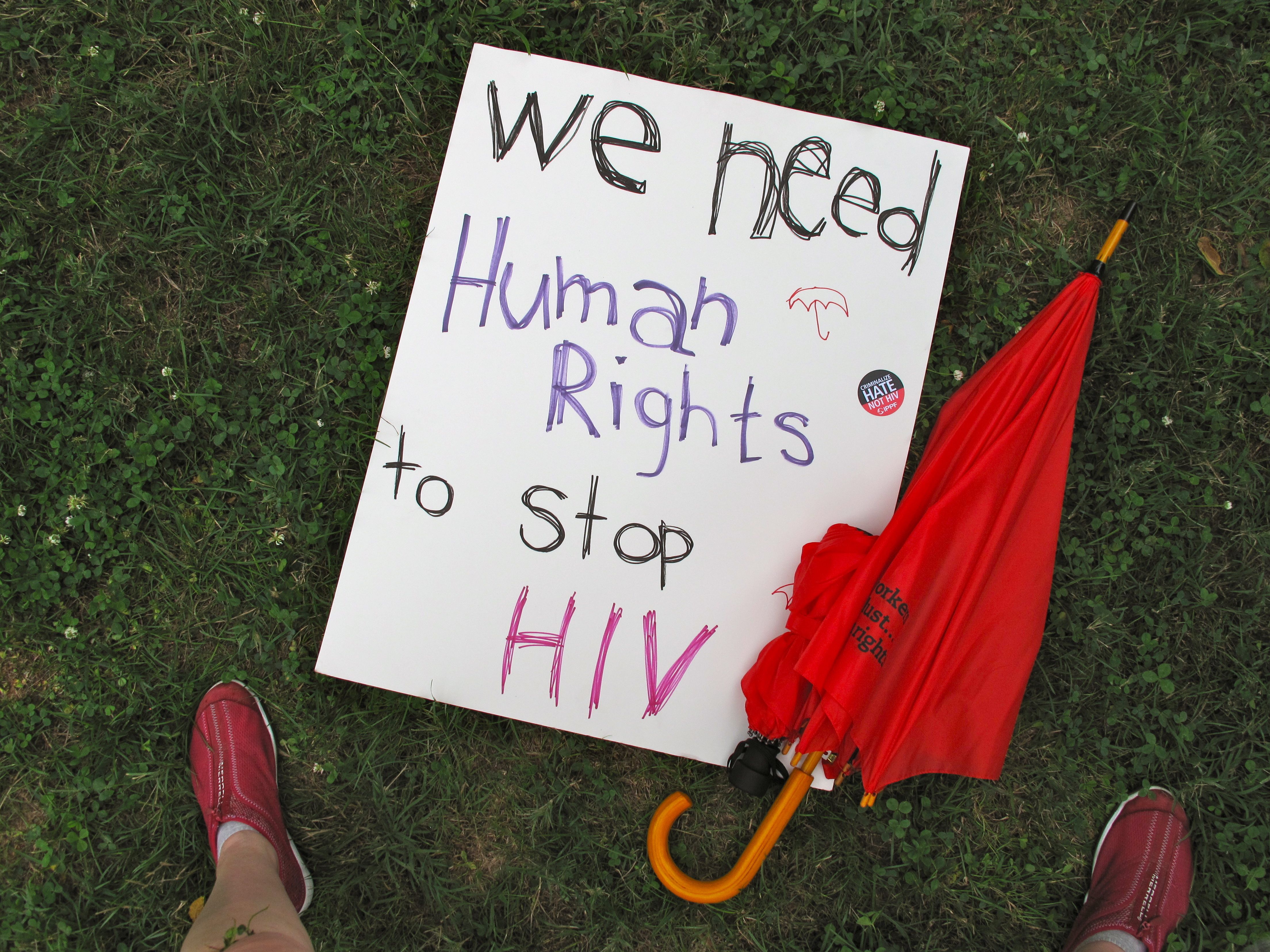
Today, the Office of National AIDS Policy (ONAP) released the “National HIV/AIDS Strategy for the United States (Updated to 2020)” and once again fails to address the needs of sex workers. The rights of sex workers and the movement to fight HIV are interconnected in very real ways, yet government agencies continue to erase the needs and rights of sex workers by excluding them from community consultation sessions and refusing to hear what sex workers have to say. When ONAP sought community consultation to update the National HIV/AIDS Strategy, not one word was mentioned to sex worker advocates. They asked leaders in the fight against HIV/AIDS to give their opinions about various topics related to addressing the HIV/AIDS epidemic, but somehow failed to find sex workers important enough to hear out their opinions. In response, the recently established research team directed by Best Practices Policy Project and Desiree Alliance to author “Nothing About Us, Without Us: HIV/AIDS-Related Community and Policy Organizing for US Sex Workers,” the nation’s first report on HIV and sex work with a particular focus on people who are transgender, sent a letter to ONAP to voice our concerns.
In our letter we noted that the 2010 National HIV/AIDS Strategy makes no mention of sex workers, despite the fact that sex workers have been organizing for decades around these very issues. The updated policy is almost the same in this regard, taking a tiny step to mention the term “sex work” once, but nothing regarding the systematic exclusion of sex worker organizations from HIV policy decisions has changed. Cris Sardina, the director of Desiree Alliance, viewed the live streaming of the release of the policy today. “They mentioned over and over that stigma needs to be removed, yet one of the most vulnerable populations were excluded from these discussions,” she concluded. “Sex workers are stigmatized within stigmatized populations. Sex workers affected by HIV/AIDS didn’t have a voice in the national discussions today. That these voices, so important a component to these policy-making platforms, were merely an afterthought on a couple of pages is disheartening.” Our joint letter to ONAP already expressed our disappointment to policy makers that the very communities they claim to be helping are left out of the consultation process. Finding barriers to preventing the spread of HIV are impossible to find without working with communities living with and affected by HIV. Despite this, sex workers are continually left out as a community partners and transgender women are continually misgendered by the Centers for Disease Control as being classified as “Men who have sex with Men” – an inappropriate classification that ignores the profound sociological (and biological) differences between transgender women and gay, bisexual, or questioning men.
The letter also addresses concerns about the continued criminalization of the sex trade, as it has caused numerous health consequences for those involved and perceived to be involved as sex workers. Undoubtedly, the President’s goal to reduce HIV incidence is hindered by law enforcement policies across the nation to continue using condoms as evidence of prostitution and human trafficking related cases. Without proper labor rights and working conditions, sex workers may make decisions that affect their health. When accessing health care, sex workers face open discrimination and poor medical counseling due to their status for working in the sex trade. These are serious health considerations that impact addressing HIV in the United States, but apparently not relevant enough to be included in the United State’s National HIV/AIDS Strategy. Sex worker organizations that engage in grassroots harm reduction–often entirely without funding to do so because of the erasure of our communities as leaders in prevention strategies–have long recognized the gulf between what is said in the national policy and the lived experiences of sex workers. A representative of SWOP Maryland and harm reductionist working with migrant sex workers and survival workers who are often homeless, read over the new policy this afternoon. “They said the word ‘sex work’ in the policy, I liked that. I jumped up when I saw it,” she said, “but the policy is contradictory and fails to analyze the implications of certain interventions for criminalized groups. They are talking about testing people and their partners, but if you are a sex worker, what does it mean that you are going test me and my partners? How will that work since we are criminalized and stigmatized?”
Thanks to Derek Demeri and NJRUA for this blog post with input from Penelope Saunders (BPPP), SWOP MD and Desiree Alliance