July 19th, 2026 · bppp · Art, CampaignsComments Off on Resisting Criminalization during FIFA World Cup 2026 - Tags: FIFA
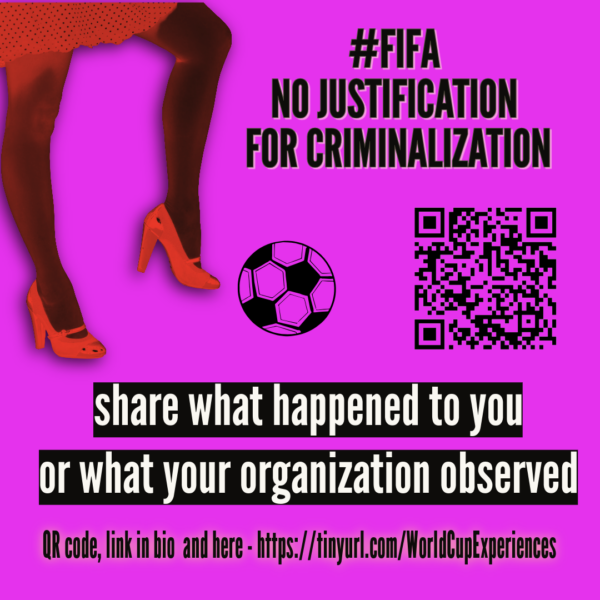
On June 1, 2026 BPPP and NJRUA released a statement to the press decrying the increased criminalization and policing occurring in NJ, and other parts of the US, that is being justified by misguided concerns about “human trafficking” during the World Cup. Yesterday BPPP and NJRUA hosted a chill online session to share information about arrests that have occurred, resources to assist and to create art/narratives to share during today’s FIFA World Cup Final. N’Jaila Rhee of NJRUA shared that 8 community members that we know about have been arrested and $13,000 was stolen from them by the police. If you know of an incident that has occurred during the World Cup please use our online form to share what happened. The form can be filled in anonymously. Please share any fears, concerns, restrictions, surveillance, harassment, arrests, etc. What else can you do? Sign our open letter that resists the criminalization of sex workers and all our communities in NJ.
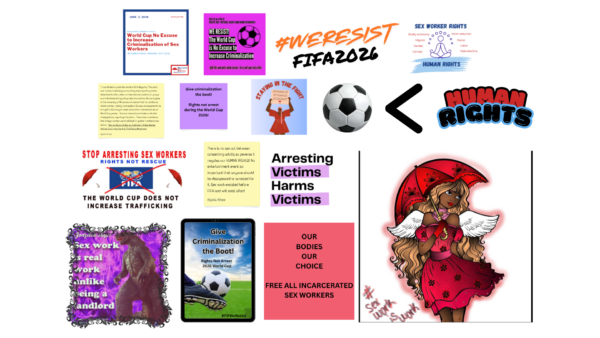
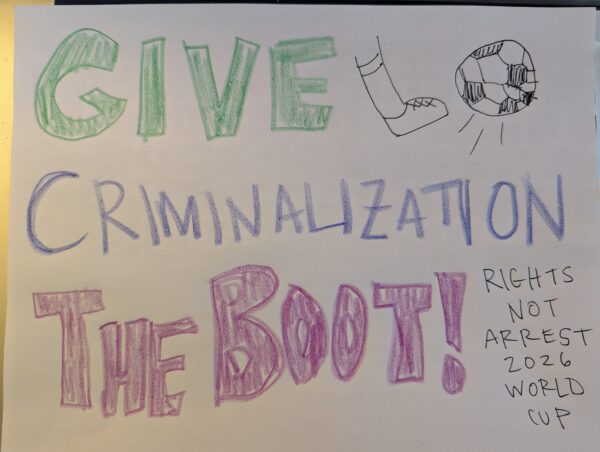
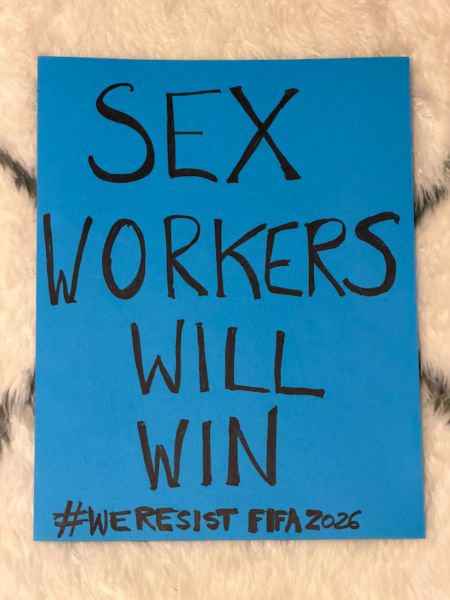
We created art in both analog and digital formats yesterday, coming up with hashtags such as #WeResistFIFAWorldCup2026, #rightsnotarrest and #sexworkerswillwin #FIFAWorldCup2026. We have been sharing the art with narratives about what we want and how criminalization is affecting us. There is no justification for criminalization of hard working people – immigrants, trans folks, BIPOC folks, people with disabilities, people working for their families and communities – during the World Cup. What do our communities want? To be able to work, keep our money, and be part of today and the future. No arrests. All art is shared with the permission of the creators.
June 2nd, 2026 · bppp · CampaignsComments Off on Sign on to an open letter – World Cup No Excuse to Increase Criminalization of Sex Workers
Today June 2, 2026, on International Whores Day, we the Sex Workers Rights Coalition and the signatories below, urge public officials in New Jersey to end the criminalization of sex workers’ lives.
We are concerned that sex workers in New Jersey are criminalized for the work they do to put food on the table. We are concerned that arrests and incarceration under anti-prostitution statutes in the state of New Jersey lead to long-lasting and unjust consequences, such as loss of housing and educational opportunities. We are concerned that each year new legislation is proposed that attempts new ways to harm and/or erase sex workers. We have seen again and again that the criminalization of sex workers’ lives provides opportunities for law enforcement to harass sex workers and violate their rights. The idea that sex work is illegal encourages abusers to perpetrate crimes against sex workers because they (mistakenly) believe that no one cares.
We support sex workers. We acknowledge their role in providing for their families and supporting entire communities. Sex workers are passionate advocates for rights and justice. Sex workers defend public health. Sex workers stand side by side with workers in other professions for the rights of all.
October 31st, 2025 · bppp · Art, CampaignsComments Off on Being Heard at the United Nations
Apparently the United States of America has pulled out of the Universal Periodic Review of our country’s human rights record. We will not be silenced.
We are hosting an in person event inside the United Nations in Geneva to share about our survey, our reports and to launch BEING HEARD, a magazine filled with art, commentary, poetry and resistance by sex workers and trans people.
The magazine will be distributed in a limited print run during the side event. Download the PDF here.
Where – Room VIII, United Nations Geneva
When – Noon in Geneva until 1.30 pm, 6 November 2025
This event will not be live streamed but we will create a recording and upload it later.
March 3rd, 2025 · bppp · CampaignsComments Off on #UPR2025 focus on policing - Tags: UPR
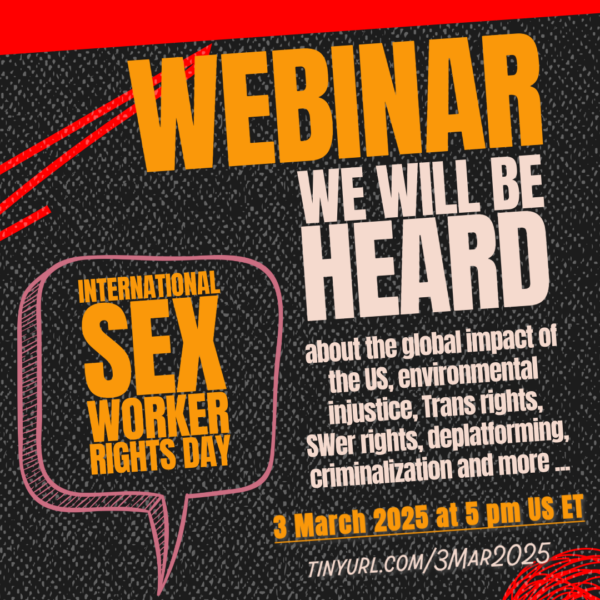
For the last 18 months BPPP and other coalition members have been documenting the human rights impact of policing on our communities and organizing to change these circumstances. This material will be presented to the United Nations in April 2025 and provide organizing impetus throughout this year. Today March 3rd — International Sex Worker Rights Day — some of the multi-person research collective and artists illustrating the issues hosted a webinar. Two of the topics we presented today considered policing and criminalization. The following is a summary of the presentations.
Sex workers are everywhere. We live and work in every social strata in the United States of America and represent every social group. Just like any other human being. We are here. We are seeking to enjoy all our human rights and to live our lives. We are in solidarity with oppressed communities worldwide.
From our research and our lives we know that criminalization is an overarching and intersecting issue that impacts all issue areas in this report.
Street-based or outdoor workers, transgender or gender expansive people, BIPOC, migrants, youth, and incarcerated sex workers, consistently bear a particularly heavy burden of law enforcement abuse and harassment, institutional discrimination, and violence. The current U.S. administration is hostile to human rights, violating in particular the rights of migrants and transgender people.
Criminalization leads to policing, which leads to arrest and incarceration. Involvement with the court system in the US is extremely harmful to low income people and all other groups of folks who don’t have access to power and privilege. As advocates we have seen court rooms dedicated to processing arrests for prostitution that are set up for all to plead guilty. The risks of pleading not guilty are enormous and lead to ongoing police harassment, legal threats and enormous monetary costs. Criminalization of our lives is insidious, stigmatizing us and forcing us to the margins. Current forms of criminalization impinge on our right to organize and digital assembly
This is why global recognition of the rights of sex workers is important to note and affirm. And the hope of Recommendation 86. During the 9th Round of the Universal Periodic Review, the U.S. accepted Recommendation 86 from Uruguay to “undertake awareness-raising campaigns for combating stereotypes and violence against gays, lesbians, bisexuals and [transgender people], and ensure access to public services paying attention to the special vulnerability of [sex] workers to violence and human rights abuses.”
Policing (including defunding the police)
Globally and in the United States, the number one concern for sex workers is policing.
In human rights terms police are considered “State agents” and governments are responsible for their actions and impact on our rights. Other state agents are ICE and border guards.
We should be protected from police violence and abuse and torture while detained. However, being treated “well” by law enforcement/ICE is not enough.
What we want is an end to the criminalization and policing of our lives. We consider every arrest for sex work a rights violation. In gathering information about activities to change patterns of policing, we heard from our communities that “we have always questioned police motives.” The public outcry about policing occurring in 2020 and onwards via Black Lives Matter, has opened new strategies for sex workers and trans folks and new engagement.
What have our experiences been in the last 4 to 5 years from the survey? 18% of folks surveyed said that they had been detained by the police. Folks shared that they had been caught up or arrested in stings, by undercover, for walking down the street and while advocating for rights of others. Some were detained for hours/days and some arrests led to years in prison.
12% of folks said that they had been forced to have sexual contact with police in order to avoid arrest etc. 10 people gave detailed accounts of these situations. We also received reports of security guards exhibiting the same abuses.
Run ins with the police leads to incarceration (25% said they had been incarcerated for issues relating to sex work, but also for being involved in protests, for defending themselves, for protecting other sex workers, for outstanding warrants and the like).
Substance users have specific issues. We have a great report from Philly that we will be citing
32% (about one third) of folks said that they had been part of the outpouring of campaigns in the United States to change or end policing since 2020/the beginning of the COVID-19 pandemic. Folks were inspired to challenge the ways in which policing is carried out and in some cases to defund the police.
In May 2020 George Floyd was killed by the police and what he said with his dying breaths was the whole pandemic and its intersections – I can’t breathe. I see pandemics of COVID, policing, anti Black violence, and anti-sex worker and anti-trans sentiments. I believe now that more people see that these are all linked. I am heartened that sex workers are being included as essential in organizing to end policing as we know it. I was also very pleased to see donations of actual money coming in for Black led organizations.