Tag: UPR

PRESS RELEASE – June 16, 2025

What will the United Nations say about the rights of sex workers and trans people in the Trump era?

Contacts: N’Jaila Rhee – newjerseyrua@gmail.com and +15515878079

Penelope Saunders – bestpracticespolicyproject [@] gmail.com and +12024809061

Noor Z.K. — contact@sweetatx.org and +1 5123870037

The Sex Workers Rights Coalition – rightsnotrescue@protonmail.com

Beyonce Karungi– beyonce30a@gmail.com and +1 347 604 1364

Communities of people in the United States have for many decades relied on the United Nations to bring global attention to what is going on here and to stop rights violations. Currently, the world is reeling from the impact of the Trump administration’s policies. Inside the United States social movements are organizing via actions such as the No Kings Protests.

Sex workers and trans people across the United States have made a decision to take all of our intersecting issues concerning policing, attacks on sexual and reproductive rights and ICE to the United Nations to shine a global spotlight on the rights abuses going on here. And to speak about the solutions we have that so often get little mention in the press.

“Right now sex workers and trans folks in the US are being arrested and harmed. The US also caused immeasurable damage to health and rights worldwide by abruptly cutting off US aid earlier this year,” said Penelope Saunders, co-director of BPPP, one of the groups involved in the action. “As we activate for fundamental change we want to see the end of criminalization and new ways of supporting health globally that includes se worker rights, reproductive rights and trans rights. We think the global community at the UN will stand with us.”

The United States’ is currently under scrutiny at the UN’s Universal Periodic Review where United Nations member states gather input from civil society to assess the ways the US has ultimately failed to protect the human rights of vulnerable populations. Beyonce Karungi, a sex worker rights activist who led the process of creating a shadow report to the UN earlier this year states that, “we always want the voices of sex workers to be heard. Nothing about us, without us.” 

The Sex Workers Rights Coalition will send a delegation to Geneva from June 22-28 to meet with representatives from member states that are willing to publicly support the rights of Sex Workers and Transgender people in the United States.

Access the 2025 UPR reports by the Sex Workers’ Rights Coalition and the Sexual Rights Initiative here and keep up to date with the coalition’s UPR work at bestpracticespolicy.org. The Coalition has also worked with 11 artists to illustrate the issues in accessible ways.

PRESS RELEASE FOR PR

The Sex Workers Rights Coalition addresses US human rights violations at the United Nations

Contacts: N’Jaila Rhee – newjerseyrua@gmail.com and +15515878079

Penelope Saunders – bestpracticespolicyproject [@] gmail.com and +12024809061

Noor Z.K. — contact@sweetatx.org and +1 5123870037

The Sex Workers Rights Coalition – rightsnotrescue@protonmail.com

Beyonce Karungi– beyonce30a@gmail.com and +1 347 604 1364

The United States’ is currently under scrutiny at the UN’s Universal Periodic Review where United Nations member states gather input from civil society to assess the ways the US has ultimately failed to protect the human rights of vulnerable populations. The Sex Workers Rights Coalition, consisting of community members, leaders, and advocates, will send a delegation to Geneva from June 22-28 to meet with representatives from member states that are willing to publicly support the rights of Sex Workers and Transgender people in the United States. 

The UPR is a United Nations mechanism that allows member states to review each others’ human rights interventions every five years based on treaties, conventions, and recommendations from previous review periods

In preparation for the UPR, the sex workers’ rights coalition have gathered over two hundred responses to a comprehensive survey giving sex workers an opportunity to speak frankly about their experiences with sex migration, healthcare access, criminalization, Transgender rights, substance user rights, climate change, and  US policy in and outside the US on sex workers’ wellbeing. The coalition submitted two joint reports to the United Nations review of the United States, including one done in collaboration with the Sexual Rights Initiative (SRI). 

The following recommendations by coalition partners and survey participants highlight issues sex workers, many of whom identify as LGBTQIA+, face as a result of the US’ criminalization of sex workers’ lives domestically and its insistence on exporting criminalization as policy to places where it offers aid through policies like the Anti-Prostitution Loyalty Oath. Our report to the UN highlights that within the US, “Being treated “well” by law enforcement/ICE is not enough. We want an end to the criminalization and policing of our lives. We consider every arrest for sex work a rights violation. In gathering information about activities to change patterns of policing, we heard from our communities that “we [sex workers] have always questioned police motives.”

The delegation is calling on the US to:

  • End the criminalization of sex workers’ lives in all forms, eliminating discriminatory registries, surveillance systems (including those based on facial recognition and AI), and policing practices that violate our rights and target the most marginalized among us
  • Recognize sex workers as legitimate rights-holders under international law, ensuring that our voices and expertise are included in all policymaking, data collection, and human rights monitoring processes
  • Invest resources in education, job training, healthcare, and housing programs for marginalized people engaged in sex work;
  • Create new funding approaches based on the promotion of human rights and health for sex workers and transgender people.

The sex workers rights coalition aims to secure at least one recommendation to the United States from a UN member state calling for the above issues to be addressed. This mission to Geneva is a refusal to ignore the mechanisms put in place to hold violators accountable because our lives are in fact, protected by the UN declarations on Human Rights, The Sustainable Development Goals, the Convention for Ending all forms of Discrimination Against Women (CEDAW) and other foundational human rights documents.  Report contributor, Zee Xaymaca highlights that, “The US was instrumental in creating these human rights guarantees. Yet, in the current climate, the US is overtly anti-human rights. We won’t go willingly with this continued shift toward fascism where people are made increasingly vulnerable so that their fundamental freedoms can be trampled. We resist in every way available and welcome the support of our sibling nations to protect our lives and livelihoods in the face of constant government hostility. At the very least, the world must bear witness to the harm the US perpetrates against Trans and Queer BIPOC folks, sex workers, unhoused and migrant and otherwise vulnerable communities inside and outside of its borders.”

To date, the US has only accepted one recommendation from the UPR process pertaining to sex workers’ rights. In 2010, with Recommendation 86, Uruguay’s delegation called on the US to “Undertake awareness-raising campaigns for combating stereotypes and violence against gays, lesbians, bisexuals and transsexuals, and ensure access to public services paying attention to the special vulnerability of sexual workers to violence and human rights abuses.”

Access the 2025 UPR reports by the Sex Workers’ Rights Coalition and the Sexual Rights Initiative here and keep up to date with the coalition’s UPR work at bestpracticespolicy.org. The Coalition has also worked with 11 artists to illustrate the issues in accessible ways.
PRESS RELEASE

Contacts: N’Jaila Rhee – newjerseyrua@gmail.com and +15515878079

Penelope Saunders – bestpracticespolicyproject [@] gmail.com and +12024809061

Noor Z.K. — contact@sweetatx.org and +1 5123870037

The Sex Workers Rights Coalition – rightsnotrescue@protonmail.com

Beyonce Karungi– beyonce30a@gmail.com and +1 347 604 1364

June 2025

In October 2024, the Sex Workers’ Rights Coalition administered a survey gathering information from sex workers around the world on the impact of migration, healthcare access, criminalization, Transgender rights, climate change, and US policy in and outside the US on sex workers’ wellbeing. A team of community members incorporated these responses from over 200 people and organizations into two reports (one done in collaboration with the Sexual Rights Initiative) that have been submitted to the United Nations Universal Periodic Review (UPR) in anticipation of the US’ human rights record review in 2025. 

The UPR is a United Nations mechanism that allows member states to review each others’ human rights interventions every five years based on treaties, conventions, and recommendations from previous review periods.

In anticipation of the US’ review the coalition, consisting of Trans and Queer sex worker led organizations, and allied sex workers rights organizations will send a cohort of advocates to the June session of the Universal Periodic Review in Geneva Switzerland from June 22-28, 2025. During this time our delegation will meet with delegations from nations that have a history of supporting sex worker and Trans rights with the aim of making a formal recommendation to the US based on the following list gathered from our community based research:

  • End the criminalization of sex workers’ lives in all forms, eliminating discriminatory registries, surveillance systems (including those based on facial recognition and AI), and policing practices that violate our rights and target the most marginalized among us
  • Recognize sex workers as legitimate rights-holders under international law, ensuring that our voices and expertise are included in all policymaking, data collection, and human rights monitoring processes
  • Invest resources in education, job training, healthcare, and housing programs for marginalized people engaged in sex work;
  • Create new funding approaches based on the promotion of human rights and health for sex workers and transgender people.

These recommendations highlight issues sex workers, many of whom identify as LGBTQIA+, face as a result of the US’ criminalization of sex workers’ lives domestically and its insistence on exporting criminalization as policy to places where it offers aid through policies like the Anti-Prostitution Loyalty Oath. Our report to the UN highlights that within the US, “Being treated “well” by law enforcement/ICE is not enough. We want an end to the criminalization and policing of our lives. We consider every arrest for sex work a rights violation. In gathering information about activities to change patterns of policing, we heard from our communities that “we [sex workers] have always questioned police motives.”

To date, the US has only accepted one recommendation from the UPR process pertaining to sex workers’ rights. In 2010, with Recommendation 86, Uruguay’s delegation called on the US to “Undertake awareness-raising campaigns for combating stereotypes and violence against gays, lesbians, bisexuals and transsexuals, and ensure access to public services paying attention to the special vulnerability of sexual workers to violence and human rights abuses;”

Access the 2025 UPR reports by the Sex Workers’ Rights Coalition and the Sexual Rights Initiative here and keep up to date with the coalition’s UPR work at bestpracticespolicy.org. The Coalition has also worked with 11 artists to illustrate the issues in accessible ways.

#UPR2025 focus on policing

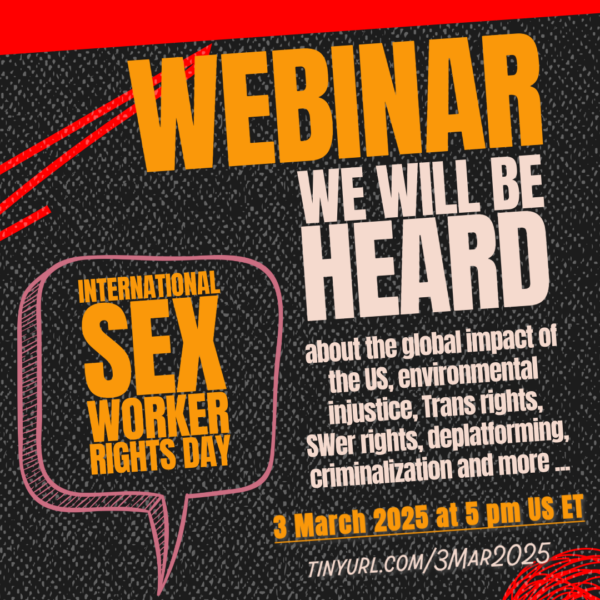
For the last 18 months BPPP and other coalition members have been documenting the human rights impact of policing on our communities and organizing to change these circumstances. This material will be presented to the United Nations in April 2025 and provide organizing impetus throughout this year. Today March 3rd — International Sex Worker Rights Day — some of the multi-person research collective and artists illustrating the issues hosted a webinar. Two of the topics we presented today considered policing and criminalization.  The following is a summary of the presentations.

Sex workers are everywhere. We live and work in every social strata in the United States of America and represent every social group. Just like any other human being. We are here. We are seeking to enjoy all our human rights and to live our lives. We are in solidarity with oppressed communities worldwide.

From our research and our lives we know that criminalization is an overarching and intersecting issue that impacts all issue areas in this report. 

Street-based or outdoor workers, transgender or gender expansive people, BIPOC, migrants, youth, and incarcerated sex workers, consistently bear a particularly heavy burden of law enforcement abuse and harassment, institutional discrimination, and violence. The current U.S. administration is hostile to human rights, violating in particular the rights of migrants and transgender people.

Criminalization leads to policing, which leads to arrest and incarceration. Involvement with the court system in the US is extremely harmful to low income people and all other groups of folks who don’t have access to power and privilege. As advocates we have seen court rooms dedicated to processing arrests for prostitution that are set up for all to plead guilty. The risks of pleading not guilty are enormous and lead to ongoing police harassment, legal threats and enormous monetary costs. Criminalization of our lives is insidious, stigmatizing us and forcing us to the margins. Current forms of criminalization impinge on our right to organize and digital assembly

This is why global recognition of the rights of sex workers is important to note and affirm. And the hope of Recommendation 86. During the 9th Round of the Universal Periodic Review, the U.S. accepted Recommendation 86 from Uruguay to “undertake awareness-raising campaigns for combating stereotypes and violence against gays, lesbians, bisexuals and [transgender people], and ensure access to public services paying attention to the special vulnerability of [sex] workers to violence and human rights abuses.”

Policing (including defunding the police) 

Globally and in the United States, the number one concern for sex workers is policing. 

In human rights terms police are considered “State agents” and governments are responsible for their actions and impact on our rights. Other state agents are ICE and border guards. 

We should be protected from police violence and abuse and torture while detained. However, being treated “well” by law enforcement/ICE is not enough. 

What we want is an end to the criminalization and policing of our lives. We consider every arrest for sex work a rights violation. In gathering information about activities to change patterns of policing, we heard from our communities that “we have always questioned police motives.” The public outcry about policing occurring in 2020 and onwards via Black Lives Matter, has opened new strategies for sex workers and trans folks and new engagement.

What have our experiences been in the last 4 to 5 years from the survey? 18% of folks surveyed said that they had been detained by the police. Folks shared that they had been caught up or arrested in stings, by undercover, for walking down the street and while advocating for rights of others. Some were detained for hours/days and some arrests led to years in prison. 

12% of folks said that they had been forced to have sexual contact with police in order to avoid arrest etc. 10 people gave detailed accounts of these situations. We also received reports of security guards exhibiting the same abuses.

Run ins with the police leads to incarceration (25% said they had been incarcerated for issues relating to sex work, but also for being involved in protests, for defending themselves, for protecting other sex workers,  for outstanding warrants and the like). 

Substance users have specific issues. We have a great report from Philly that we will be citing

32% (about one third) of folks said that they had been part of the outpouring of campaigns in the United States to change or end policing since 2020/the beginning of the COVID-19 pandemic. Folks were inspired to challenge the ways in which policing is carried out and in some cases to defund the police.

In May 2020 George Floyd was killed by the police and what he said with his dying breaths was the whole pandemic and its intersections – I can’t breathe. I see pandemics of COVID, policing, anti Black violence, and anti-sex worker and anti-trans sentiments. I believe now that more people see that these are all linked. I am heartened that sex workers are being included as essential in organizing to end policing as we know it. I was also very pleased to see donations of actual money coming in for Black led organizations.

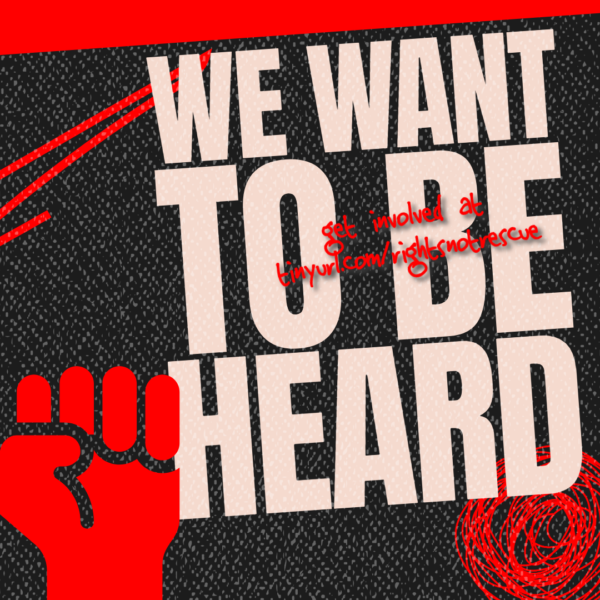
We want our voices heard!

We are calling on folks to join us in letting the world know about our rights and resistance in United States, and to help us hold the United States accountable for impacting sex workers and trans people worldwide. We will be collecting information from sex workers and organizations in the coming weeks. If you would like to participate in the process by being interviewed, filling out a survey, creating art or joining a working group please fill out this short form – https://form.jotform.com/rightsnotrescue/join-us

What is the UPR? The United Nations (UN) Universal Periodic Review (UPR) is a session to hold member countries responsible for their human rights records. The United States is being reviewed in 2025 for the first time in five years. By 1 March 2025 we will write a report on the human rights abuses sex workers face and sex workers will then travel to Geneva, Switzerland to speak to member countries about the criminalization of our communities.

The US is obligated to uphold everyone’s human rights, including the rights to housing, education and healthcare; the right to be free from arbitrary arrest, due process violations, and invasions of privacy; the right to be free from torture and inhumane treatment; the rights of migrants; as well as rights related to the US obligation to eliminate racial discrimination.

It is well known that the US violates these rights on a routine basis when it comes to sex workers, or people profiled by the police, social workers and service providers as sex workers. The UPR provides a space for the world to hear about how the US has violated human rights over the past four years. Due to the current policy approaches in the US, we plan to include in our report information about the experiences of migrants, trans folks, people in street economies and document the economic impacts of US policies worldwide, but having said that we want to hear from every one and about every issue.

Read about our past actions and Recommendation 86 at http://www.bestpracticespolicy.org/tag/upr/

If you know of anyone who would like to participate pls share this post and information using our fliers.

Key Facts About Human Rights Violations & Sex Work ~ For the 2020 UPR of the U.S.A.

Our organizations are members of the US Human Rights Network (USHRN) and so have been offered the opportunity to include some of our key concerns in the network’s report. BPPP, NJRUA, BSWC, Desiree Alliance and the Outlaw Project created the summary to send to the USHRN this last week.

Throughout the U.S., criminalization and stigmatization of sex workers, and those profiled as such, prevents them from exercising their human rights. Violations include: violence perpetrated by law enforcement and ICE; cruel, inhuman or degrading treatment during incarceration; denial of due process and protection in the justice system; denial of rights to housing, healthcare, reproductive rights, education, income, employment and economic justice. People of color, transgender people, migrants, street based sex workers, homeless, youth, and people living with HIV/AIDS bear a high burden of these violations. U.S. policies undermine the health and rights of sex workers internationally by requiring that organizations seeking funding adopt a policy against sex work. Additionally. in 2018 the U.S. passed rights violating restrictions via the Stop Enabling Sex Traffickers Act (SESTA) and Allow States and Victims to Fight Online Sex Trafficking Act (FOSTA). This legislation limits the sharing of vital safety information for sex workers online and causes economic harm and social marginalization. The current U.S. administration is violating the rights of immigrants. The intersection of this with anti-prostitution policies has resulted in the death of migrant sex workers at the hands of state agents, the incarceration of migrant sex workers in rights violating detention centers, and deportation. The U.S. government has engaged in a sustained campaign to roll back the rights of transgender people. Transgender people are assumed to be sex workers by the authorities, leading to incarceration and immigration detention, where they are harmed, highly vulnerable to sexual assaults, and killed.

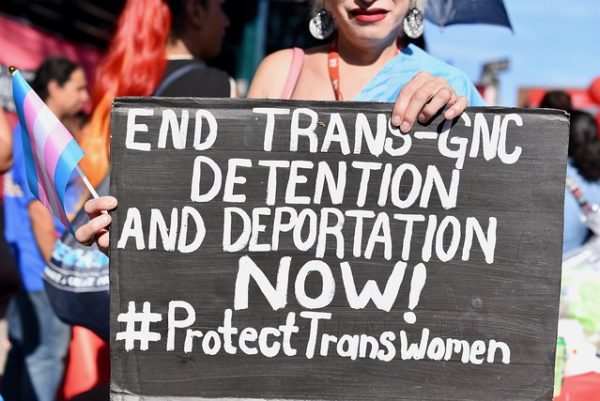
Photo by PJ Starr, September 20, 2019

Previous UN Body Recommendations: In prior UPR process, the U.S. accepted Recommendation 
86, requiring it to “[u]ndertake awareness‐raising campaigns
 for combating stereotypes and violence against [LGBT people] 
and ensure access to public services, paying attention to the
 special vulnerability of sex workers to violence and human rights abuses.” The U.S has pursued policies that directly contradict this commitment, putting sex workers at heightened risk of human rights abuses. In 2014, the UN Human Rights Committee challenged the U.S. Justice Department’s claim that arresting people for sex work is a humane or effective way to fight trafficking, and called on the U.S. to align its anti-trafficking initiatives with human rights norms, which reject criminalizing sex workers.

Key Recommendations for inclusion via USHRN: The United States of America should:

  • End the criminalization of sex workers lives by full decriminalization (anti-criminalization) of sex work and eliminate policies, such as “zero tolerance” of prostitution, “prostitution free zones,” and loitering measures, that undermine protection of and respect for human rights of sex workers. Sex workers should also be able to expunge any criminal records relating to these laws.
  • Vigorously investigate and put an end to policing practices targeting transgender people.
  • Repeal SESTA/FOSTA and eliminate other federal policies that conflate sex work and human trafficking and prevent sex workers from accessing services such as healthcare, HIV services and support.
  • Address the atrocities of current immigration and migration border policies in the United States. Migrant and immigrant sex workers are especially affected by these laws as they are under no protections of federal guidelines. 
  • Remove “participation in prostitution” as grounds for removal from the country, from the category of “crimes of moral turpitude” and as grounds for denying visas/legal status to individuals seeking to visit, reside in, or become citizens of the United States.