
Category: Press Release

Criminalization & Violence Undermine HIV Prevention & Human Rights Says New Report

FOR IMMEDIATE RELEASENothingAboutUsWithoutUs
December 11, 2015

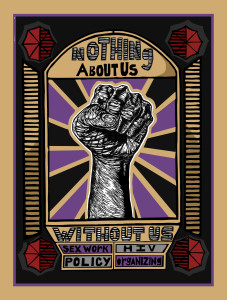
Tomorrow at the US Human Rights Network conference in Austin TX, Best Practices Policy Project and Desiree Alliance will be releasing the first ever report in the U.S. on sex workers, rights, and HIV created by sex workers themselves. The first report, Nothing About Us Without Us: Sex Work, Policy, Organizing, Rights, will focus on transgender sex workers.

“Sex workers are part of the solution in addressing HIV, and the U.S. is out of step with global acceptance of the need to bring a human rights focus to the issues of sex work and HIV, while moving away from criminalization,” said Sharmus Outlaw, co-author of the report. “Transgender sex workers are now suffering the effects of the silence about what works to prevent and treat HIV.”

The report finds that the policing of transgender communities is justified in the name of anti-prostitution efforts; and that this policing is directly at odds with scientifically-based HIV prevention and outreach efforts. “All across the U.S., transgender women–especially those of color–are harassed and arrested by police officers as they go about their daily life,” said Monica Jones, a transgender rights organizer from Phoenix, Arizona and advisor to the report. “This policing impacts transgender outreach workers doing essential activities in HIV prevention such as delivering condoms and information to the community. We need to stop the arrest of transgender outreach workers, end the practice of using condoms as evidence, stop policing of medications and end the policing of trans people’s lives so that they can walk down the street and reach health care centers when they need to access HIV related care.”

The report finds transgender people with experience in sex work and the sex trade are much more likely to be living with HIV than transgender people who have never been sex workers, or the general population of the United States. In the District of Columbia, for example, 73% of trans sex workers self report living with HIV. But the National HIV/AIDS Strategy, the highest level of policy in the U.S., has been almost entirely silent about sex work and sex work was entirely omitted from the National HIV/AIDS Federal Action Plan released in late 2015.

“As sex workers develop our own research around HIV/AIDS policies, we are connecting with others to rethink and strategize about structural barriers best practices in HIV prevention,” said Cris Sardina of Desiree Alliance. “It is not acceptable to ignore how violence, stigma, and criminalization affect trans women who engage in sex work. Nor can we ignore how policing sex work affects all trans women who are often profiled and arrested as sex workers.”

The report will be released at 3 pm CST December 12 and will be available at http://www.bestpracticespolicy.org/nothing-about-us-without-us/.  The release event will be live streamed on Periscope by @swoplosangeles and social media will use the following #silenceequalsdeath and #advancingrights2015. More information can be found at the Release Event page: https://www.facebook.com/events/1660187327592533/permalink/1660187340925865/


PRESS CONTACTS:
Darby Hickey 202-250-4869 and darbyhickey @ gmail.com

Monica Jones 602-575-9332

Cristine Sardina director @ desireealliance.org


New Report on Transgender Experiences in Sex Work Recommends Decriminalization

New Data Shows Harms to the Community

December 7, 2015….New York, NY – The Red Umbrella Project (RedUP), the National Center for Transgender Equality (NCTE), and Best Practices Policy Project (BPPP) today released a groundbreaking report on the experiences of transgender people in the sex trade. Meaningful Work: Transgender Experiences in the Sex Trade presents new data and analysis from the National Transgender Discrimination Survey (NTDS), first published in 2011 and still the largest-ever published survey of transgender people in the United States. Meaningful Work is the first in depth look at the 694 NTDS respondents (11% of the survey total) who reported sex trade experience.

In 2011, the NTDS reported that transgender people experience high levels of discrimination in every area of life, as well as high levels of poverty, unemployment, homelessness, negative interactions with police, incarceration, and violent victimization. One result of this widespread discrimination is that many transgender people engage in sex work to earn income or trade sex for housing or other needs. Meaningful Work takes a deeper look at those respondents who traded sex for income:

  • an overwhelming majority (69%) had experienced a negative job outcome such as being fired or denied a job because of being transgender,

  • nearly half (48%) had experienced homelessness, and

  • nearly a third (31%) lived on less than $10,000 a year.

Read the full report here. Read the Executive Summary here.

The criminalization and stigmatization of commercial sex can worsen the discrimination and marginalization that transgender people already face. Transgender sex workers reported high levels of harassment and violence, often at the hands of police: 64% reported being mistreated and nearly one in 10 were sexually assaulted by police. The report also found striking racial disparities, with Black and Latina/o transgender people are far more likely to report any sex trade experience (44% and 33%). Transgender people of color with sex trade experience reported far higher levels of poverty, mistreatment, and negative health outcomes than their white counterparts.

To address these disparities, the report makes several policy recommendations, including the full decriminalization of sex work. National LGBT organizations including NCTE recently joined Amnesty International and the World Health Organization in calling for decriminalization on the grounds that criminalizing sex work prevents sex workers from seeking help from police, needed services, or other employment and impedes HIV prevention efforts. Other recommendations include reforming policing practices and investing in voluntary, non-judgmental, and harm reduction-based social services. The report also urges LGBT organizations and other community groups to prioritize work with sex workers themselves in developing solutions that meet people’s needs for safety, health, and opportunity.

“Trading sex for money is an act of resilience by so many trans people, in the face of tremendous societal violence and discrimination,” said Darby Hickey, Policy Adviser at BPPP and a transgender woman former sex worker. “This report shows how criminal laws, policing, and anti-sex worker stigma combine with anti-transgender bias, producing terrible results. Trans sex workers, particularly women of color, know what the solutions are and it is past time that LGBT groups center their experiences and wisdom.”

“Far too often, the manner in which we deal with sex workers is to criminalize their behavior, without addressing any of the systemic barriers that influence participation in the sex trade. Bad policies and practices, such as using condoms as evidence and court mandated programs, not only don’t help trans sex workers, but actually worsen their outcomes,” said Erin Fitzgerald, Research and Policy Director of the Red Umbrella Project.

“We can’t ignore the fact that so many transgender people, particularly in communities of color, have had experience in the sex trade, often simply as a means of getting by,” said Harper Jean Tobin, Director of Policy at NCTE. “This means of survival, however, too often comes along with increased risk of violence, HIV, and barriers to health care and other supports–all of which are made worse by criminalizing sex work. All people involved in the sex trade, whatever their circumstances, deserve safety, opportunity, and dignity.”

The Red Umbrella Project (RedUP) is Brooklyn based peer-led organization which amplifies the voices of people in the sex trades to take greater control of our lives and livelihoods through sustained and structured peer-mentoring initiatives, multimedia storytelling platforms, and public advocacy. For more information go to www.redumbrellaproject.org. The National Center for Transgender Equality is the nation’s leading social justice advocacy organization winning life-saving change for transgender people. For more information go to www.transequality.org. The Best Practices Policy Project (BPPP) is dedicated to supporting organizations and advocates working with sex workers, people in the sex trade and related communities in the United States. For more information go to www.bestpracticespolicy.org.

###

US Sex Workers Respond to Visa & Mastercard Dumping Backpage

Sex workers and people in the sex trade are once again facing the brunt of misguided anti-trafficking efforts. Sex workers and people profiled as such face arrest and incarceration all in the name of “ending trafficking” and now low income people are being denied access to a place where they could advertise. Miss Andrie has written an excellent piece on the situation at Backpage, concluding that, “Like many ostensible anti-trafficking efforts, this will do very little to actually affect human trafficking. It will, however, impact free speech, and serve to make many sex workers’ lives more difficult.” Organizations across the United States, including BPPP, have united to publicize the issues in the following press release.

FOR IMMEDIATE RELEASE Contact: Derek J. Demeri| Atlantic City, NJ | 973.356.4456 | jdemeri20@gmail.com Lindsay Roth | Philadelphia, PA | 443.370.7626 | lindsay@swopusa.org

SEX WORKERS, TRAFFICKING VICTIMS MORE VULNERABLE AS VISA, MASTERCARD CUT TIES TO BACKPAGE.COM

Sex workers and advocates are denouncing a move by Visa and Mastercard to discontinue processing credit card transactions for Adult Services ads on BackPage.com. “This policy effectively disenfranchises thousands of sex workers across the country who do not have access to any other means of online-advertising,” said Lindsay Roth, Board Chair of the Sex Workers Outreach Project. “Those who may have worked independently prior to the policy change may now have to rely on third parties, including traffickers, in order to meet their needs.” “

Risk to violence is multiplied for workers who belong to other marginalized groups,” Derek Demeri of the New Jersey Red Umbrella Alliance said. “This will especially impact women of color, queer youth, transgender women and immigrants who will no longer have access to web-based safety tools like client screening.” Demeri and other advocates report that multiple communities were deeply affected after last year’s closure of MyRedBook.com, a site where sex workers and their customers met and reviewed each other. Advocates say that like MyRedBook, BackPage.com enables people to work independently, reduces their dependence and vulnerability, and allows them to share harm reduction information online. Pushing these workers even further into the shadows cuts them off from social services and makes them more vulnerable to violence and coercion. “These efforts are misguided and will cause significantly more harm to those in the sex trade, including trafficked individuals,” said Kristen DiAngelo, a trafficking survivor who recently co-authored a study in Sacramento that showed 18% of street-based prostitutes interviewed in the last nine months had returned to the streets after the closure of MyRedBook.com.

Many are concerned about the root of the changes that are occurring in the name of “ending trafficking.” “It’s alarming when bank and credit institutions can decide how money obtained legally can be used based on their ideas of morality,” Monica Jones, a national transgender and sex worker activist in Phoenix remarked. Penelope Saunders, the coordinator of the Best Practices Policy Project, shares Ms Jones’ concern. “The general public has been mislead into believing that cracking down on civil liberties is a way of ‘saving’ women from trafficking,” she said, “but once people look more closely at what these so-called anti-trafficking restrictions actually do, they are appalled by the real consequences to low income people and the rights violations that ensue.”

Viable solutions to address human rights violations are well known in the social service sector, but often receive much less media fanfare than hyped stories of sexual exploitation. “If there is a genuine desire to end human trafficking,” Kate D’Adamo of the Sex Workers Project in New York states, ”Then there needs to be a focus on key factors that increase vulnerability to trafficking: access to public services, youth homelessness, and additional employment opportunities.” Opponents of the decision are circulating a sign-on letter amongst sex workers and supporters, in which they ask Visa and MasterCard to “Appeal to reason…” and reconsider their move to stop allowing transactions for Adult Services on BackPage.com. ###


U.S. Sex Worker Rights Activists Call for U.N. to Hold U.S. Government Accountable

FOR IMMEDIATE RELEASE | May 8, 2015

CONTACTS: Geneva- Monica Jones 602-575-9332, Derek Demeri jdemeri20@gmail.com;

United States- Janet Duran- 973-900-4887, Penelope Saunders- 917-817-0324, penelope.saunders@gmail.com


U.S. Sex Worker Rights Activists Call for U.N. to Hold U.S. Government Accountable

U.N. to Review US Government Human Rights Record on May 11th

Geneva–Representatives of U.S.-based sex worker rights organizations are in Geneva, Switzerland, meeting with members of the United Nations Human Rights Council (HRC), and advocating for greater human rights protections. The HRC will hold its quadrennial Universal Periodic Review (UPR) of the U.S.’ human rights record on May 11th at 9am (3am EST), at the U.N. in Geneva. The UPR is a peer-based review process, through which the human rights record of each member state of the U.N. is subject to scrutiny by fellow governments, which call on other each other to address and end violations of civil, political, economic and social human rights in their own countries.

In advance of the review this year, advocates with Best Practices Policy Project, Desiree Alliance, and Sex Workers Outreach Project-NY submitted a report to the HRC. Written in consultation with sex workers and their allies throughout the country, the report shows that criminalization and stigmatization of sex workers, and those profiled as such, exposes them to rape, extortion, physical violence, harassment, and discrimination at the hands of law enforcement. Criminalization and stigma can also lead to denial of housing, healthcare, parenting and other reproductive rights, education, incomes, and employment. The report demonstrates that the legal system frequently fails to recognize that sex workers can be victims of violence, and thus denies justice or support to sex workers who seek help.

For Monica Jones, a human rights advocate and transgender woman of color from Phoenix, AZ, the issues she is raising in Geneva have directly impacted her own life. Like many transgender and gender non-conforming people of color, she is threatened by regular harassment by police, who use anti-sex work laws to intimidate and harm members of communities already vulnerable to discrimination. “As long as the police can target my community using these anti-sex work laws,” Ms. Jones notes, “we will never be safe from violence, including the violence of incarceration.”

The UPR of the U.S. comes as major uprisings are sweeping the country in response to persistent police violence and murders of people of color. Sex worker communities, particularly those of color, are all too familiar with the rampant profiling, harassment and violence that police carry out throughout the U.S. Sex worker rights advocates in Geneva are in solidarity with the #blacklivesmatter movement and other similar racial justice movements that seek to end police brutality. “We refuse to be silenced when the criminalization and stigmatization of our communities means our voices and existence don’t matter to those who hold power,” said Derek Demeri, a member of the New Jersey Red Umbrella Alliance, who is in Geneva. Demeri pointed out that one of the many detrimental effects of stigma and criminalization is increased risk to sex workers’ health and wellbeing. “The U.S. is obligated to uphold the right to health under the Universal Declaration of Human Rights, yet municipalities criminalize possession of condoms, jeopardizing the health of sex workers and other communities and placing them at risk of contracting HIV and other sexually transmitted infections,” he said.

###